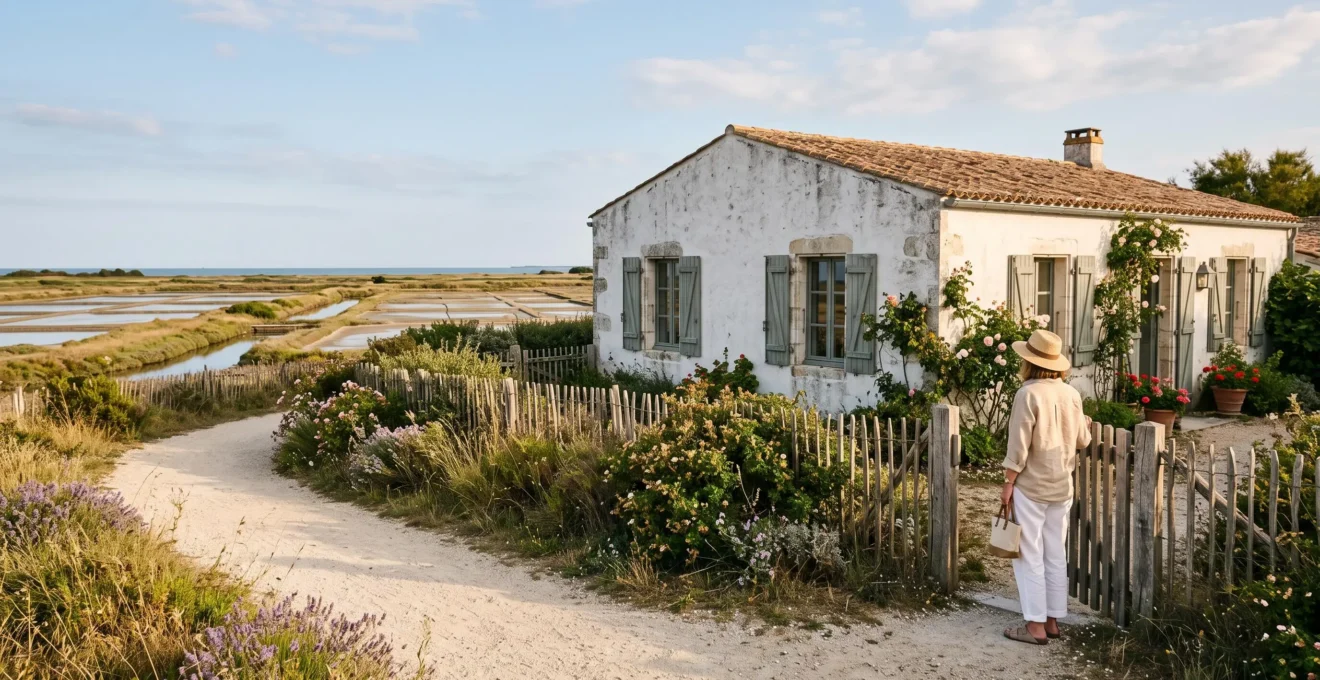
Direct answer: A truly exceptional luxury villa on Île de Ré is not defined by “more” (bigger, flashier), but by verifiable fit with the island’s protected identity: regulated architecture, a location whose value you can justify on a map (village, beach access, calm), and services that are clearly stated and actually delivered.
On Île de Ré, the word “luxury” is often used for very different properties. The safest way to compare like-for-like is to translate each claim (“exclusive”, “authentic”, “high-end”) into something you can see, check or ask for before you book.
This article gives you a practical reading grid anchored in what makes the island specific: a preserved landscape, a strong architectural signature, and an urban planning framework that limits what can be built or altered. The goal is simple: help you judge whether a villa’s price is supported by observable value—not marketing vocabulary.
What to verify first when a listing claims “luxury” on Île de Ré
- Architecture: does the villa respect the island’s traditional codes, including renovation choices and exterior coherence?
- Location: which village, what ambience, and what is actually reachable on foot/bike (beach, port, market, cycle paths)?
- Amenities: are the pool, garden, terraces and interiors described with concrete details, not generic adjectives?
- Services: what is included (housekeeping, concierge, check-in support) and what is only “available on request”?
- Evidence: are there precise photos, plans, and answers to specific questions—or only staged visuals and vague claims?
What Defines Luxury on Île de Ré?
On this island, luxury tends to mean discretion, coherence, and scarcity—not ostentation. A villa feels “exceptional” when it belongs to Île de Ré rather than looking interchangeable with any upscale coastal destination.
One reason is structural: the island is managed through an intercommunal planning framework that aims to preserve landscapes and the traditional architectural character. The Communauté de Communes de l’Île de Ré explains that its PLUi includes enforceable zoning rules and is complemented by architectural and landscape recommendations designed to protect the insular setting and the traditional Rétais style.
You can consult the official documents via the règlement d’urbanisme de l’Île de Ré, which is useful even for travelers (not only owners): it clarifies why certain features are rare, why some extensions are impossible, and why well-executed renovations carry value.
A practical limit to keep in mind: “Luxury” can be claimed even when a villa is merely large or recently refurbished. On Île de Ré, the more reliable indicator is architectural integration plus location logic plus clear services.
To make this tangible, imagine two hypothetical listings with the same number of bedrooms. The first shows a visually dominant façade, generic materials, and an outdoor area that could be anywhere; the second keeps the island’s codes and uses modern comfort discreetly (openings, shading, privacy, pool area). Both may be expensive, but only the second aligns with what the island protects—so its “luxury” is easier to justify.
Architecture and Design: The Signature of Ré la Blanche
What architectural features define a high-end villa on the island? Look for consistency with local forms—and the quality of how contemporary comfort has been integrated, not simply added.
The island’s identity is also cultural and officially recognized. The official tourist office notes that Île de Ré has held the “Pays d’art et d’histoire” label since 26 July 2012, awarded by the French Ministry of Culture—recognition of long-term commitment to heritage and architecture (without implying UNESCO listing of the whole island).
This matters for you because it sets an expectation: an exceptional villa typically respects a readable “Ré la Blanche” signature through observable choices such as façades, rooflines, openings, and exterior coherence—especially after renovation.
What should you look for in exterior architecture?
Start with what you can verify quickly in photos, during a viewing, or with a walk-by if you are on the island: the villa should feel “settled” into its street or landscape rather than imposing itself on it.
- Overall silhouette: low, calm volumes rather than showy heights.
- Façade coherence: finishes that look intentional and durable, not decorative “trend” choices.
- Openings and shading: doors, shutters, pergolas or screening that make sense for sun, wind, and privacy.
- Outdoor boundaries: discreet fencing, hedges, and sightline management—key for comfort in dense summer periods.
How do regulations affect renovation quality and value?
Strict planning and architectural expectations do not automatically create quality, but they do create a filter: well-executed projects often show better design discipline, because constraints force choices to be precise (materials, proportions, landscaping, privacy).
In practice, this is where genuine high-end work becomes visible: concealed technical installations, carefully planned terraces, and modern comfort that does not break the exterior harmony. When a listing claims “authentic charm + contemporary features”, ask for the specifics that prove it (what was restored, what was rebuilt, and what was added).
Verification reflex: When the exterior looks “too generic”, ask for a short, factual renovation summary (scope, year, what changed). If the answer stays vague, treat “heritage style” as a marketing label—not evidence.
Location Matters: Which Villages Command the Highest Prestige?
Which villages or areas of Île de Ré offer the most prestige? Prestige is rarely one single “best” place; it is a match between your usage (quiet retreat, walking access, boating atmosphere) and a village’s structure (port, beaches, heritage core, density).
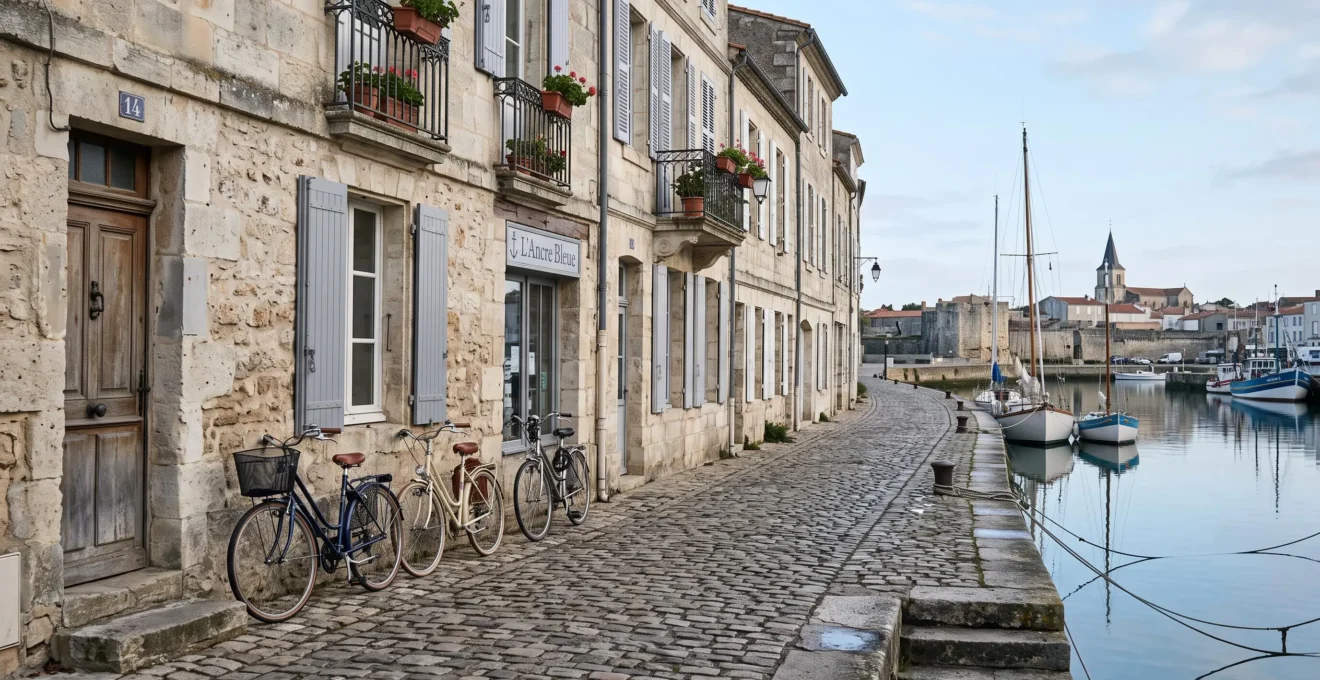
A location justifies a higher budget when it delivers something you can verify: walkability to a harbour or market, immediate access to cycle paths, a calm micro-setting, or a highly preserved village fabric. If you have to drive for everything, you may be paying for a brand name rather than everyday comfort.
How can you compare villages without relying on hype?
Use concrete comparison axes you can test on a map and, ideally, on foot: where are the daily anchors (market, bakery streets, port), how quickly you reach open landscapes, and how “seasonal” the immediate area feels once peak weeks are over.
For context on the island’s territory, official demographics can also help you understand density and structural differences between communes. INSEE reports that the intercommunal area of Île de Ré inhabitants had 17,961 inhabitants in 2023 (density 210.5 inhabitants/km²), which frames why privacy, parking, and access can become decisive factors in summer.
These données démographiques officielles de l’île won’t tell you which street is quiet, but they remind you that the “island feel” coexists with real constraints—making micro-location a luxury driver.
A concrete comparison: port village vs. more secluded village
In a port-centred village, prestige often comes from atmosphere: heritage streets, cafés, and the ability to live without a car. The trade-off can be noise, tighter plots, and parking complexity.
In a more secluded village setting, exclusivity can mean space, calmer nights, and easier access to beaches or natural landscapes by bike. The trade-off is that you may rely more on cycling or driving for markets and evening life—so the villa’s on-site amenities and services become more decisive.
Services and Amenities That Set Exceptional Villas Apart
What services and amenities distinguish a genuinely luxury villa? Look for elements that change your day-to-day experience: privacy, ease of living, and reliability—especially outside peak season.
A listing can claim “high-end” while offering only standard equipment. Exceptional villas usually make their value legible through specific, operational details: how outdoor areas are organized, what is included, who welcomes you, and how issues are handled if something fails.
Which amenities are actually meaningful on Île de Ré?
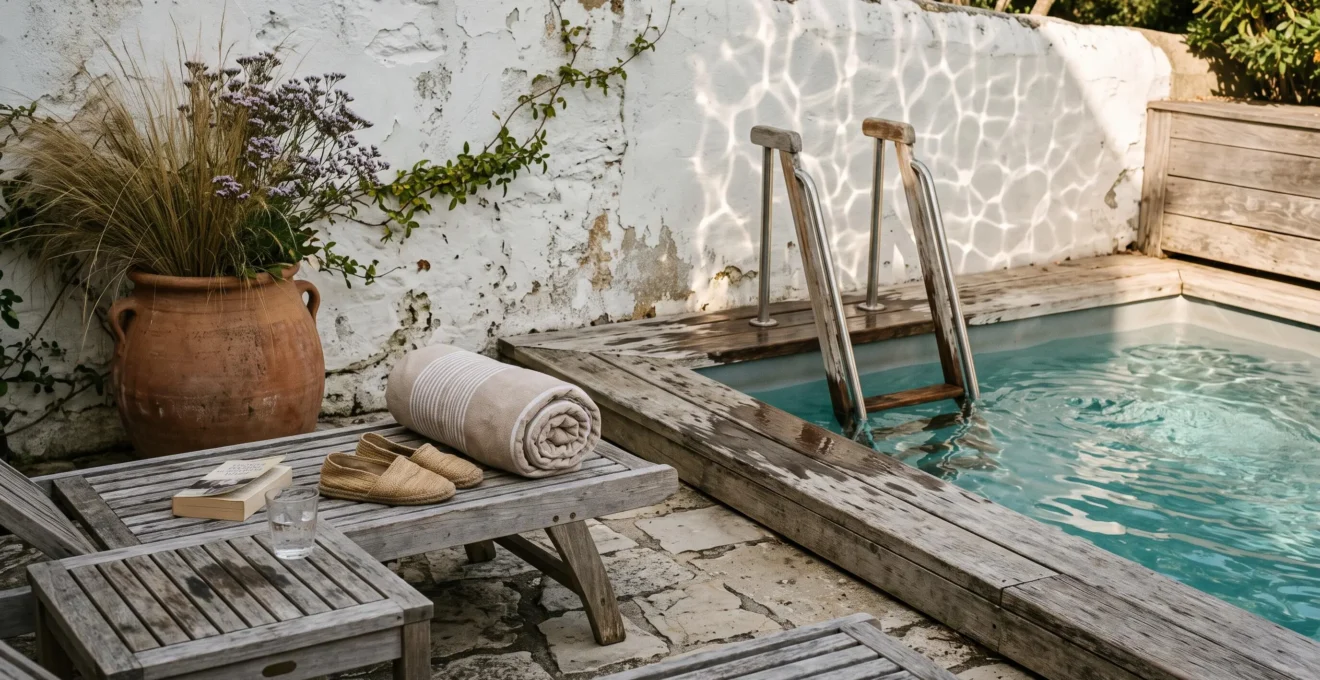
On an island where outdoor life matters, prioritize amenities that improve comfort without relying on buzzwords. A pool can be valuable, but the real differentiator is often the quality of the outdoor layout: shade at the right hours, wind protection, discreet lighting, and privacy from neighbours.
- Outdoor comfort: terrace zoning (dining vs lounging), shade solutions, outdoor shower, secure storage for bikes.
- Landscaping: mature planting, well-managed boundaries, and a garden that looks designed rather than “filled”.
- Indoor experience: calm bedrooms, effective ventilation, and spaces that make sense for groups (not just for photos).
Regulation reality check: because planning rules exist and vary by zone, never assume a promised “future pool” or “easy extension” is feasible. Only treat it as real if documentation and authorization are provided.
What services indicate “real luxury” rather than a nice house?
Services matter most when they are explicit: who does what, when, and whether it is included. If a villa is presented as premium, you should see premium clarity—especially around arrivals, housekeeping, linen changes, and support in case of breakdowns.
Compare two hypothetical listings: Villa A offers beautiful photos but no service details beyond “high standing”. Villa B specifies check-in process, housekeeping cadence, linen quality policy, and a reachable local contact. Even if both look similar online, Villa B is easier to trust—and easier to value.
How to Evaluate a Luxury Villa Before Booking
How can you tell if a villa on Île de Ré is really worth the price? Use a method: verify architecture, verify micro-location, verify what you will actually get (amenities + services), then look for contradictions between photos, text, and answers.

- Check architectural coherence
Do exterior photos show a consistent style and well-finished details (openings, shutters, roofline, boundaries), or a generic “luxury” look that ignores local codes?
- Pin down the micro-location
Ask for the exact village and a clear description of what is walkable/cyclable (beach access, market streets, harbour, cycle paths). If the answer is evasive, treat the location claim as unproven.
- Turn amenities into facts
For each amenity (pool heating, air circulation, parking, bike storage), request the operational detail that makes it real: size is less important than usability and reliability.
- Demand service clarity
Who welcomes you? What is included (housekeeping, linen, assistance) and what costs extra? A genuinely high-end offer explains this without you having to guess.
- Look for “evidence quality”
Prefer listings with varied, specific photos and clear answers over staged visuals and repetitive adjectives. Quality properties can usually be described precisely.
Red flags that often signal marketing inflation
These signals don’t prove a villa is bad, but they do indicate that “luxury” may be a label rather than an earned standard. When you spot them, slow down and ask for proof.
- Photo set looks generic (few angles, no exterior context, no neighbourhood clues).
- Description relies on “exceptional/unique/high-end” without specifying materials, layout, or services.
- No clear statement about what is included (housekeeping, linen, support).
- Location is described vaguely (“near everything”, “close to the sea”) without measurable reality.
Cas pratique
You are comparing two hypothetical villas at a similar budget. Villa 1 is larger and newly decorated, but the exterior feels out of place and the listing cannot confirm walkable access to daily anchors. Villa 2 is slightly smaller, but shows coherent architecture, a calm outdoor layout, clear bike storage, and explicit service terms. Using the checklist, Villa 2 is more likely to be “exceptional” on Île de Ré because its value is supported by verifiable fit with the island and by operational reliability—not by size alone.
What makes a villa truly high-end on Île de Ré?
A villa is truly high-end when its “luxury” is measurable: architectural coherence with the island’s protected character, a micro-location you can justify (walk/bike access, calm, landscape), and clearly defined services (welcome, support, housekeeping). If any of these are vague, the price may be driven more by marketing than by proven value.
How do strict building regulations affect villa quality and value?
They limit what can be built and how renovations can be carried out, which increases scarcity and can raise the value of well-executed, compliant projects. As a traveler or buyer, treat regulation as a reason to verify claims: if a listing suggests easy changes (extension, new pool), ask for documentation rather than assumptions.
What should you check before booking a high-end villa in Saint-Martin-de-Ré or elsewhere?
Confirm the exact micro-location and what is reachable without a car; verify outdoor privacy and shade; ask what services are included; and request precise photos that show the exterior context. In port villages, also clarify noise and parking conditions, because they can heavily impact comfort during peak weeks.
How to tell real luxury from marketing claims when comparing Île de Ré villas?
Replace adjectives with questions. “Exclusive” becomes: what is the exact location and what does it allow you to do on foot or by bike? “Authentic” becomes: what renovation choices prove respect for local architecture? “High-end” becomes: which services are included and who delivers them? Real luxury survives precise questions.
If you want one decision rule, make it this: an exceptional luxury villa on Île de Ré is the one whose value remains clear after you remove all adjectives. When architecture, location, amenities, and services are described in verifiable terms, you can justify a high budget with far less uncertainty.
Punta Cana can be a useful comparison point if you are weighing “island luxury” styles and want a very different coastal model to benchmark expectations.
Use the checklist before you commit, and keep your standard consistent: on Île de Ré, the rarest luxury is not extravagance—it is a property that is demonstrably aligned with a protected island identity, down to the details you can actually verify.